Roof repair in Clarksville that starts by finding where the water actually gets in
Most roofs we are called to look at do not need replacing. They need a detail fixed — a chimney saddle, a valley, a sidewall, a pipe boot that has split after fifteen summers. The job is finding which one, and that takes somebody on the roof and in the attic rather than somebody guessing from the driveway.
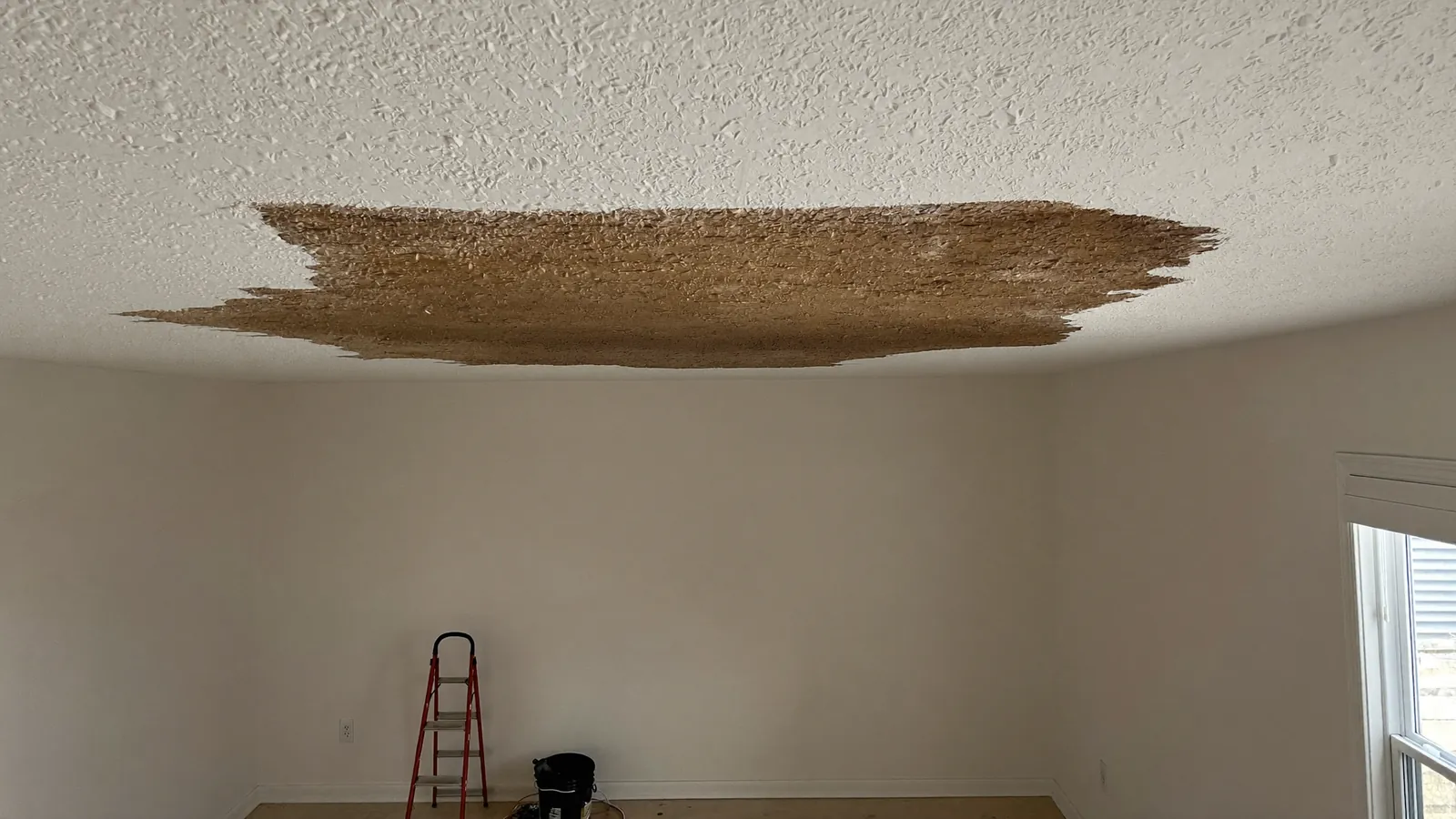
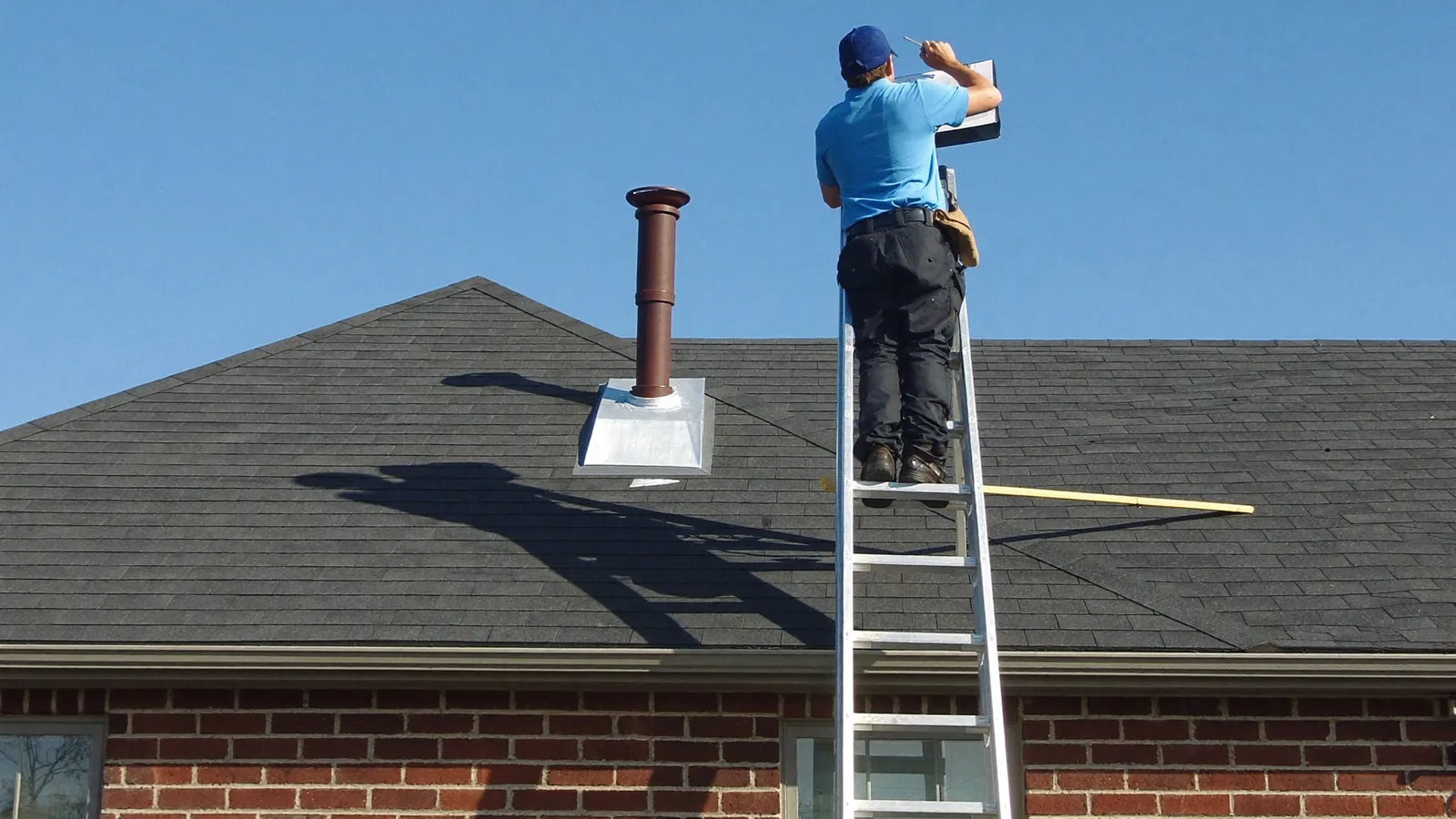
Roof repair in Montgomery County divides into about five jobs, and they fail for different reasons. Flashing — the metal where the roof meets something else, a chimney, a dormer wall, a skylight — is the most common leak we find, because it is the only part of a roof that depends on two materials moving together for twenty years without opening a gap. Pipe boots, the rubber collars around plumbing vents, crack and pull away from the pipe after roughly a dozen Tennessee summers; they are a cheap part and an extremely common leak. Valleys, where two slopes meet, carry more water than anywhere else on the roof and fail when the underlayment beneath them was skimped or the shingles were woven badly. Wind damage breaks the seal strip and lifts courses, which leaves nail heads exposed. And decking gets soft where any of the above has been leaking quietly into the sheathing for a season or two.
We do not guess at it. The inspection starts in the attic where we can, because a roof leak is far easier to find from underneath — water staining on the sheathing, daylight at a nail, a rusted nail shank, a damp rafter — and the stain on your ceiling is almost never directly below the hole. Water runs down a rafter and drips where it feels like it. From there we walk the roof: the field of the shingles, the valleys, every penetration, the flashing at every wall and chimney, the ridge, the drip edge, and the gutters, which tell you how much granule the shingles have lost. Then you get photographs of all of it and a written scope that says what needs doing and what does not.
That last part matters here. Clarksville gets a heavy traffic of crews after every hail event whose business model is to turn every call into a full replacement, and a homeowner who has been told three times that the roof is finished has no easy way to know whether it is true. A twelve-year-old architectural roof with one failed boot and a lifted course along the rake has a repair, not a replacement, and we will write that down and put our name on it. When the roof genuinely is at the end — the mat is brittle, the granule is gone across whole slopes, there are multiple layers, the decking is soft in several places — we will say that too, and price the replacement against the repair so you can see both numbers side by side.
Repairs do not need a permit in Clarksville or Montgomery County; replacements and major structural repairs do, and we pull those. For the work itself: Tennessee requires a state contractor licence for projects of $25,000 and above, and most repairs sit well below that, so insurance is the question worth asking on a repair. Ours is general liability and workers' compensation, and the certificate is available before anybody gets on a ladder.
What's included
The attic first, then the roof
Where it is accessible, we look from underneath before we look from on top, because that is where a leak actually shows itself.
Photographs of everything
Every detail we checked, including the ones that are fine, so you can see what you are paying for and what you are not.
The detail, not the slope
Flashing, boots, valleys, saddles and drip edge replaced properly rather than sealed over with a tube of caulk that lasts one season.
Decking opened and checked
Where water has been getting in, the sheathing gets opened up and replaced if it is soft. Covering rot is how a repair becomes a replacement.
Matched as closely as it can be
Shingle colour and profile matched to what is up there. On a weathered roof an exact match does not exist, and we will tell you that before, not after.
An honest replace-or-repair answer
When the roof has run out of life we say so and show you both numbers. When it has not, we do the repair and leave the rest alone.
Roof repair cost in Clarksville, TN
| Job | Typical price | Notes |
|---|---|---|
| Roof inspection with written report and photographs | Free | Condition inspections; certifications priced separately |
| Pipe boot replacement | $150 – $400 | Per penetration; often the whole leak |
| Flashing repair or replacement, per detail | $300 – $900 | Chimney, sidewall, skylight or dormer |
| Minor repair: a few courses, sealant, small patches | $300 – $1,500 | The most common repair we do |
| Moderate repair: section replacement | $1,500 – $4,000 | Includes decking where it is soft |
| Valley rebuild | $600 – $2,200 | Depends on length and whether it is open or woven |
| Decking replacement, per sheet | $75 – $160 | Found once the shingles are off |
| Storm damage repair | $1,000 – $10,000+ | Often an insurance claim |
These are 2026 ranges for Clarksville and Montgomery County, meant for budgeting rather than quoting. Pitch, the number of layers to come off, the condition of the decking and the flashing details all move the number. You get the scope and the price in writing after the inspection, and the inspection is free.
Recent work
Questions we get about roof repair
How do I know whether I need a repair or a whole roof?
Age, condition and how many problems there are. A roof under about fifteen years old with one or two failed details is a repair. A roof past twenty-five with granule loss across whole slopes, brittle shingles that crack when you lift them, and leaks in more than one place is at the end. We will give you both numbers and the photographs behind the recommendation, and you are welcome to take them to somebody else for a second read.
Can you match my shingles?
Close, usually not exact. Shingle lines change and the ones on your roof have weathered for years, so a new shingle beside an old one will show. On a small repair in a valley or behind a chimney nobody will ever see it. On a visible front slope, we will show you what the match actually looks like before we do the work so there is no surprise.
The stain on my ceiling is in the middle of a room. Is the hole right above it?
Almost certainly not. Water comes in at a penetration or a flashing detail, runs along the underside of the decking or down a rafter, and drips wherever it finds a low point. That is why we look in the attic first. Chasing the ceiling stain upward is the most common way a repair gets done in the wrong place and the leak comes back.
Will my insurance pay for a repair?
It depends what caused it. Sudden storm damage — wind, hail, a limb — is usually covered, less your deductible, which in Tennessee is often a percentage of the dwelling value rather than a flat figure. Ordinary wear, age, and leaks that have been going on for a year are not. We document it either way and tell you honestly which bucket we think yours is in. See insurance claims.
Do repairs need a permit?
No. Montgomery County permits roof replacements and major structural repair, not ordinary repair work like shingles, boots and flashing. If a repair turns out to be big enough to need one, we will tell you and pull it. The Building Codes Department is at 931-648-5718 if you want to check anything yourself.
How long will a repair last?
A properly done flashing or boot repair should last as long as the surrounding shingles have left. That is the honest framing: a repair buys you the remaining life of the roof, not twenty fresh years. If the roof has four years in it, the repair has four years in it, and we would rather you knew that going in.